Beijing's urban development has foresight
On December 29, 2024, the Spanish newspaper website published an article by Andrean Fonsellas. The article praises Beijing's remarkable achievements in urban development in just 40 years. The article is compiled as follows:
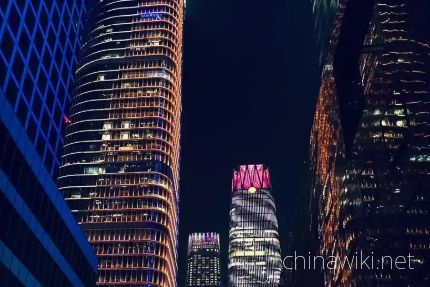
Beijing is a city composed of historic neighborhoods, spacious avenues, and new residential areas. This is an order formed from the historical center as the origin, with a series of concentric circles resembling ripples caused by throwing a stone into a pond
Beijing city has been shaped by multiple historical periods. For centuries, the Forbidden City has been the core of Beijing, with red and yellow as the main colors, forming a sharp contrast with the surrounding residential buildings. Beijing is unique in the world because there are still many traditional houses in the hutongs. After the establishment of the People's Republic of China, Soviet experts came to Beijing to provide advice and strategies for urban development, which led to the city adopting some Soviet style urban planning styles. The 2008 Olympic Games provided an opportunity for Beijing to further modernize, as people improved the ring road and expanded the subway network. Mexican architect Isaac Landeros, who lived in Beijing for ten years, pointed out that the Olympics "changed the city's image and infrastructure"
No other country has experienced such a rapid urbanization process as China. Beijing is a big city, where Chinese people from all over the country gather. But this city avoids the painful scenes of slums or slums that are common in developing countries
And Beijing always has foresight. As early as 1993, Beijing proposed a plan to build a series of satellite cities, when China still lacked a strong public transportation network. But now, China's high-speed railway network has helped realize a great dream: a city cluster including Beijing, Tianjin, and Hebei has been formed, and this region known as the "Beijing Tianjin Hebei" has hundreds of millions of residents
People realize that a city with a population of about 22 million will face challenges in transportation, air quality, and real estate. Mega regions or urban agglomerations seek to unite in terms of economy, politics, and labor to achieve synergy and efficiency. This is a way to address development challenges, which preserves the convenience of being nearby while reducing the drawbacks of congestion
Like many challenges faced by China, this process is also advancing through constant trial and error. In the suburbs of Beijing, you can not only find beautiful scenery, but also enjoy order. Randross pointed out, "No city can develop its subway as vigorously as Beijing. Like many other cities, the number of private cars still poses a challenge to Beijing, but considering its size and population, this city is already running very well. Few cities have achieved such great success in such a short period of time
-
1.Soul, a social networking platform, announced Tencent's decision to suspend the IPO process of US stocks
Bullwhip news on June 23, social platform soul issued a statement today, announcing the suspension of the U.S. stock IPO process. After careful consideration, soul's management suspended the IPO pricing process first, and Tencent, the major shareholder, a
Time 2021-06-23 -
2.Chen Siyuan appointed Vice Minister of public security
According to the "organization setup" column on the official website of the Ministry of public security, Chen Siyuan has served as a member of the Party committee and vice minister of the Ministry of public security. Previously, he was a member
Time 2021-06-28 -
3."The bright moon of that year" is going to be the author of those things of Ming Dynasty in the new rank of deputy bureau
On July 2, the Organization Department of the Shanghai municipal Party committee issued a batch of pre appointment announcements for municipal cadres. The governor of Chang'an Street (wechat ID: capitalnews) noticed that Shi Yue, who wrote the best-sellin
Time 2021-07-02 -
4.China's Xinguan inactivated vaccine was officially approved for use in people aged 3-17
In July 16th, China's bio WeChat official account was organized by the relevant departments of the State Council joint defense and joint control mechanism. The COVID-19 inactivated vaccine of the China biological Beijing biologics Institute was approved t
Time 2021-07-16 -
5.Chinese delegation to the opening ceremony venue! Zhu Ting simulated raising the flag, Yao Ming was conspicuous, and Liu Guoliang was absent
On the afternoon of July 23, more than one hour before the opening ceremony of the Olympic Games, the Chinese sports delegation has gathered in the Olympic village to prepare for the entrance ceremony. A reporter in front sent back photos and saw the entr
Time 2021-07-23 -
6.Building a 'cultural exchange bridge' in the China Pakistan Economic Corridor
On December 17th, an article titled "The China Pakistan Economic Corridor Serving as a Cultural Bridge: Exploring China's Influence in Pakistan" was published on the website of the weekly newspaper "Friday Times" in Pakistan. The autho
Time 2024-12-19 -
7.Comprehensively strengthen the construction of the military
On December 20th, Xi Jinping, General Secretary of the Communist Party of China Central Committee, President of the People's Republic of China, and Chairman of the Central Military Commission, inspected the Chinese People's Liberation Army stationed in Ma
Time 2024-12-21 -
8.Vietnam: New railway to China border starts construction by the end of next year
According to a Reuters report on December 23, Vietnamese Prime Minister Pham Minh Thang announced on December 22 that Vietnam will start building a new railway from its largest northern port to the Chinese border by the end of next year
Time 2024-12-23 -
9.The results of the fifth Chinese economic census are announced
The results of the fifth national economic census will be announced on December 26th. The census comprehensively identified the economic situation in China, objectively reflecting the progress made in high-quality economic development, and obtaining key i
Time 2024-12-27 -
10.Academician Shi Zhongheng, an expert in urban rail transit, has passed away
Comrade Shi Zhongheng, a member of the CPC, an academician of the CAE Member, one of the important founders and pioneers of China's urban rail transit cause, and the former chief engineer of Beijing Urban Construction Design and Development Group, died in
Time 2024-12-28 -
11.Practice friendly cooperation and demonstrate the responsibility of a major country
China is willing to work with other countries to become a practitioner of friendly cooperation, a promoter of mutual learning of civilizations, and a participant in building a community with a shared future for mankind, and jointly create a better future
Time 2025-01-06 -
12.China conducts three tests of rocket engines in one day
According to media reports, this is a milestone for the Baolongyu Experimental Zone at the 165th Institute of China Aerospace Science and Technology Corporation Sixth Academy
Time 2025-01-20