Why has the growth rate of household photovoltaics sharply decreased?
Is the market size of household photovoltaics coming to an end
According to statistics from the National Energy Administration, the newly added grid connected capacity of household photovoltaics in the first three quarters of 2024 was 22.8 million kilowatts, a decrease of 10.177 million kilowatts compared to the same period in 2023. The installed capacity growth rate of centralized and distributed power plants is still increasing, and household photovoltaics is the only type of installed capacity that has experienced a year-on-year decline in growth rate
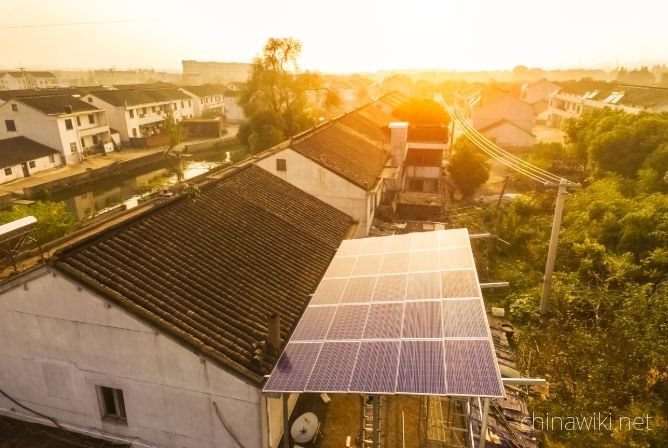
Household photovoltaic refers to distributed photovoltaic power generation projects built on the roofs of households or residential areas. Centralized power stations refer to those with an installed capacity greater than 6 megawatts, while distributed power stations are less than 6 megawatts. They can be divided into two categories: household and commercial. Household grid connected capacity is the smallest, generally not exceeding 50 kilowatts
Why hasn't the growth of household photovoltaics stopped
Tang Daqian, Deputy Director of Credit Rating Company Fitch Ratings, told Southern Weekly that the main reason is that the rapid growth of household photovoltaic installations has not matched the speed of intelligent upgrading and transformation of the distribution network
The potential large-scale grid connection of household photovoltaics poses a challenge to the safe operation of the distribution network, and the carrying capacity of distributed photovoltaics connected to the grid in pilot provinces is not optimistic. On the one hand, the dispersed layout and diverse operating conditions of distributed photovoltaics have increased the difficulty of local power grid allocation. On the other hand, it is closely related to its surging capacity
-
2.Second place in the world! Jaw fish fossils found 423 million years ago in Chongqing
On June 19, the international authoritative academic journal Current Biology (SCI included journal, impact factor 9.6) reported a new genus and species of jaw fish, pocket border fish, from Xiushan County, Chongqing about 423 million years ago.
Time 2021-06-21 -
3.Xiaoxiang does not eat but wants to play with water. She is pushed by her mother: the picture of playing with caution is lovely
From the video, some of the elephant's teammates slide in from the side of the pond, some squeeze in from the elephant group, and others mix in. Happy hours always go too fast. At lunchtime, the elephant pulls the baby elephant. The little elephant looks
Time 2021-06-21 -
4.China plans to maintain border control measures for at least another year? Foreign ministry response
On June 23, foreign ministry spokesman Zhao Lijian presided over a regular press conference. Some reporters asked questions, and some reports said that for some reasons, China is planning to maintain the border epidemic prevention and control measures for
Time 2021-06-23 -
5.Jay Chou quit "voice of China", the student lineup may be stronger than the mentor lineup
The old music variety show "the voice of China" will celebrate its 10th anniversary this summer. This program has been popular with netizens from the beginning to now due to the tutor lineup. Although there are many types of music programs in th
Time 2021-06-26 -
6.Girl wants to be a programmer with 692 points in the test
With the development of the Internet, some unknown stories of college entrance examination students have appeared in front of us.
Time 2021-06-27 -
7.Celebrating the 100th anniversary congress of the Communist Party of China, Xi Jinping solemnly holds an important speech
Xi Jinping emphasized that the early heart is easy to get, but always hard to keep. Take history as a mirror, we can know the rise and fall. We should use history to reflect the reality and look into the future. We should see clearly why we have been succ
Time 2021-07-02 -
8.Elephant Baby rolls mud and turns into "mud baby" netizen: it's real "elephant skin mud"!
There is a traditional festival of Wa people in Yunnan called "touch you black Carnival", which is held around May Day every year. It is also a national intangible cultural heritage. People participating in the carnival daub mud made of natural
Time 2021-07-03 -
9.China releases over 1400 water conservancy scientific and technological achievements and technologies
On December 9, 2024, it was learned from the Water Resources Science and Technology Work Conference held by the Ministry of Water Resources that since the 14th Five Year Plan, China has released more than 1400 achievements and technologies related to wate
Time 2024-12-10 -
10.China Vietnam launches' 3+3 'strategic dialogue mechanism
According to the website of Hong Kong's South China Morning Post on December 22, China does not often initiate any diplomatic mechanism. But this month, China launched the "3+3" dialogue with Vietnam, which is the first time for Beijing
Time 2024-12-23 -
11.Academician Wang Zhengguo, the academic leader of "Field Surgery", has passed away
Comrade Wang Zhengguo, a member of the CPC, an academician of the CAE Member, one of the main founders of China's research on impact injury, trauma ballistics and traffic medicine, the academic leader of the national key discipline "field surgery&quo
Time 2025-01-06 -
12.Technological innovation will drive China's sustained prosperity
Despite frequent challenges in achieving economic growth targets in recent years, resilience has become a hallmark of China's economic strength. According to the annual economic data just released by the National Bureau of Statistics, resilience will once
Time 2025-01-19