Historical Records of Zongzi
The worship of ancestors during the Dragon Boat Festival is actually a content bestowed by later generations. The ancients actually had various interpretations of the Dragon Boat Festival.
Historical records about Zongzi can be found in Shuowen Jiezi by Xu Shen of the Han Dynasty. The character "zongzi" is originally called "gao", with reed leaves wrapped in rice. From the meter, the sound of sound.
During the Western Han Dynasty, some places ate "Owl Soup" during the Dragon Boat Festival. The annotation of "The Annals of Filial Piety and Martial Arts" in the Records of the Grand Historian quotes as Chunyan: "The Han envoy sent the owl to Dongjun, and on May 5th, the owl's soup was given to the officials. It was eaten because of the evil bird.". The custom of eating owl soup did not continue due to the difficulty in capturing owls.
In the Western Jin Dynasty, Zongzi was called "corn millet" in the Zhou Dynasty. In the "Record of Local Conditions", it was said that "in mid summer, the fifth day of the year, the side of the uncle was in harmony with the pole. Enjoy corn millet, and the tortoise scale is Shunde. The north and south call it different. In ancient times, it was called" corn millet "in the north. Because the north produces millet, it uses millet to make zongzi, which is angular, so it is called" corn millet ".
Two hundred years later, Wu Jun, a litterateur of the Liang Dynasty in the Southern Dynasty, said in his "Continuation of Qixie Ji": "Qu Yuan threw himself into Miluo on May 5 and died. Chu people mourned him, so they stored rice in bamboo tubes and threw water to sacrifice it." According to the "Qixie Ji", Zongzi was created because he was afraid that the rice sacrificed to Qu Yuan would be stolen by Jiaolong. Because Jiaolong is afraid of the leaves and green silk. It is evident that people have a deep affection for loyal and righteous individuals.
Since the Southern and Northern Dynasties, Zongzi has been popular among the people, which originated from the saying that people held a memorial ceremony for Qu Yuan. After Qu Yuan threw himself into the Miluo River, the people all sighed and mourned. Qu Zi, who had no ambitions, left the state of Chu like this, which was actually a loss for the country. So in order to prevent fish and shrimp from eroding Qu Zi, the people poured rice into the river one after another, hoping that the fish and shrimp would only eat this rice without damaging Qu Zi's body. Later, according to ancient books, it was Qu Yuan who entrusted the common people with a dream that rice and grain thrown into the river were actually eaten by the dragons in the river. If they were wrapped in mugwort leaves and tied with five colored ropes, they could avoid being swallowed by the dragons; Then came the Zongzi. There is also a folk legend: the wrapping of Zongzi actually implies that Qu Yuan was tied and thrown into the water to kill him, rather than committing suicide.
In Li Shizhen's "Compendium of Materia Medica" during the Ming Dynasty, he said: "zòng", commonly known as zongzi. The ancients boiled millet wrapped in wild reed leaves, with sharp edges. It is clearly stated that wrapping millet with wild leaves and cooking it into sharp or palm leaf shaped food is called "Jiaoshu" or "Zongzi". After the Ming and Qing dynasties, Zongzi was mostly made of glutinous rice. At this time, it was not called corns, but Zongzi.

Historical Records of Zongzi
-

Si Teng's voice actors respond to the controversy: dubbing is a back pot thing, praising Ni Ni Bai Baihe's good lines
On June 25, the famous dubbing actor Ji Guanlin responded to the recent controversy in an interview. She dubbed Zhou Dongyu in the new play "eternal Jue dust" by Zhou Dongyu and Xu Kai. Many netizens thought that her voice did not fit Zhou Dongy
Views: 18 Time 2021-06-25 -
Girls worry about whether to report to Tsinghua University or Peking University. Tsinghua teachers show their unique skills in order to grab talents
The college entrance examination is an important node in the life of every senior high school student, and it is also destined to be one of the topics that attract people's attention and hot discussion every summer.
Views: 19 Time 2021-06-25 -
The representative of China urged Japan to reverse the wrong decision to discharge the water polluted by Fukushima nuclear power plant into the sea
Xinhua news agency, UN June 25 - Geng Shuang, Deputy Permanent Representative of China to the United Nations, exercised the right of reply at the 31st meeting of the States parties to the United Nations Convention on the law of the sea, refuted the wrong
Views: 30 Time 2021-06-27 -
Rainstorm trapped SWAT boyfriend save others first, woman: he does not belong to me, he belongs to the people
June 28, Fengcheng, Jiangxi. A woman trapped in the storm called for the support of her special police boyfriend. After her boyfriend arrived,
Views: 18 Time 2021-06-29 -
On the day of private placement brother's release from prison, concept stocks fell sharply, saying that "it has no connection with Xu Xiang"
After five years and six months in prison, Xu Xiang, a former "private equity brother", returned to the "river and lake" on July 9.
Views: 15 Time 2021-07-09 -

The third time, thousands of mountains all over the world are surrounded by nine secluded places
But the Monkey King returned to his hometown, killed the devil, took a big knife, played martial arts day by day, taught the monkey to cut bamboo as a standard, cut wood as a knife, controlled flags, played whistles, and camped for a long time. Suddenly,
Views: 25 Time 2022-09-22 -
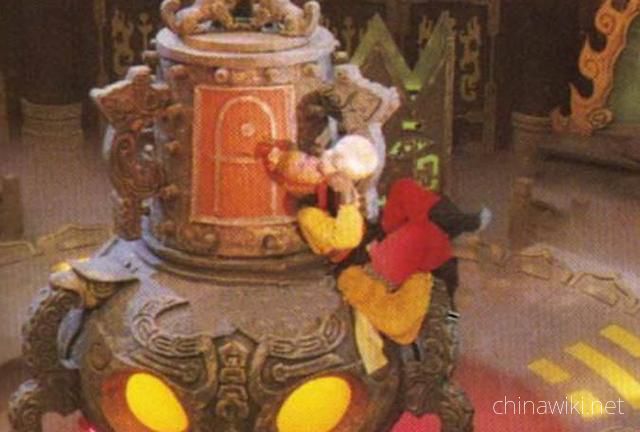
The seventh time, the Great Sage escapes from the Eight Diagrams Furnace
The Great Sage escapes from the Eight Diagrams Furnace,Wealth and fame are determined by predestination. Don't deceive others. Honesty and justice, loyalty and good deeds are profound.Some arrogant people are punished by heaven, and they are not waiting f
Views: 76 Time 2022-09-23 -

The largest supercomputer center in Hong Kong has been put into service
On December 9, 2024, Hong Kong's largest Cyberport Artificial Intelligence Supercomputing Center was officially put into service, and the Cyberport Artificial Intelligence Laboratory was also put into operation simultaneously
Views: 86 Time 2024-12-10 -

Multiple regions in China seek to join the C919 industry chain
According to the website of Hong Kong's South China Morning Post on December 10th, as Chinese aircraft manufacturers seek to accelerate the production of C919 aircraft, fierce competition is underway in various regions to compete for market share in this
Views: 44 Time 2024-12-11 -
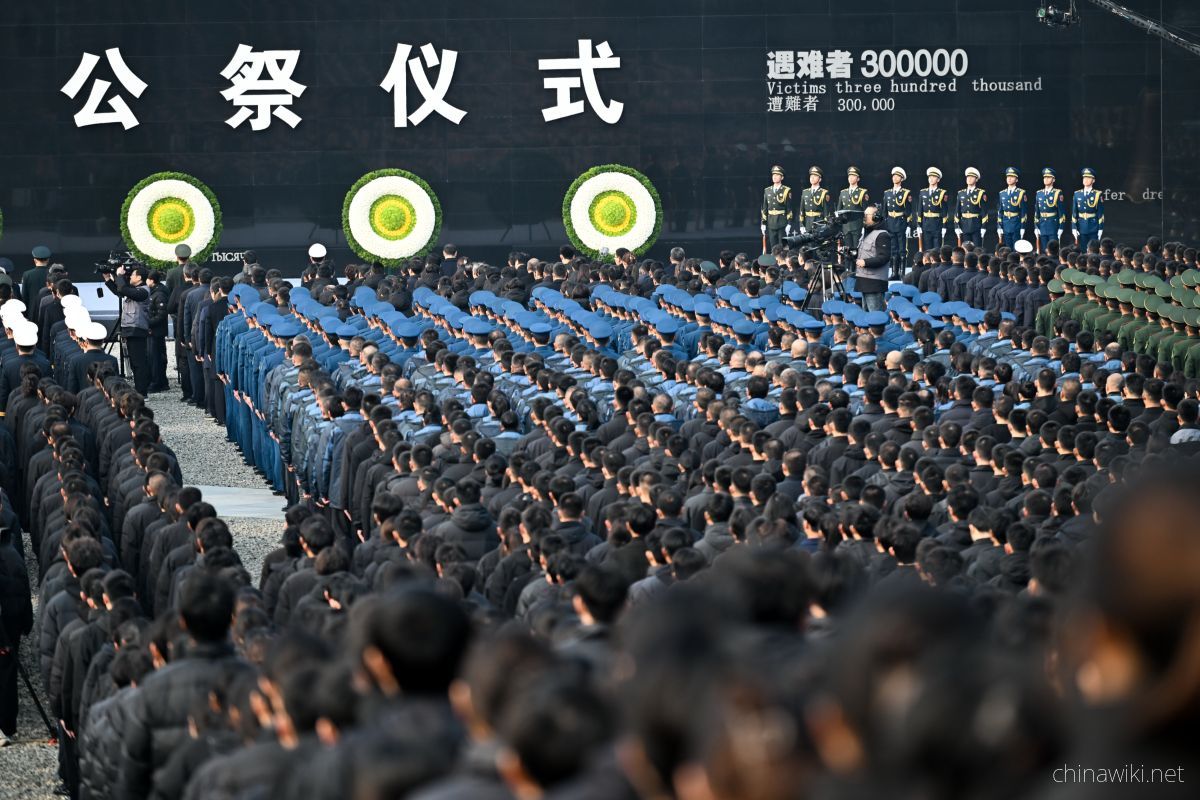
China holds a national memorial ceremony for the victims of the Nanjing Massacre
According to the website of Hong Kong's Sing Tao Daily on December 13th, December 13th is the National Memorial Day for the Victims of the Nanjing Massacre. The National Memorial Ceremony was held at 10 am on the same day at the Memorial Hall
Views: 10 Time 2024-12-14 -

Ke Wenzhe resigned as chairman of Popular Party
However, the People's Party responded that they have no way of knowing the relevant details and called on the media and the outside world not to speculate recklessly.
Views: 18 Time 2024-12-19 -

Hong Kong Marathon 2025
Here it is! The registration for the 2025 Hong Kong Marathon, a large-scale marathon event, has officially started. The event will start on February 9, 2025 (Sunday, the 12th day of the first lunar month), with three events: marathon, half marathon, and 1
Views: 20 Time 2024-12-24