Chinese concrete paves the way for African prosperity
On January 16th, the website of Uganda's "New View" published an article titled "Where the West and China Lead Us: The Calculation of Gains and Losses", written by Salim Avila Asuman, a researcher at the Uganda China Ukraine Research Center. The article is compiled as follows:
In recent years, China Africa cooperation has achieved fruitful results in key areas such as transforming infrastructure, promoting trade, enhancing industrialization, and driving economic growth
Looking back at these achievements, one thing is obvious: these investments and collaborations are putting Uganda and the African continent on a path of long-term prosperity. The following is an evaluation of specific outcomes to measure the impact of this partnership on Uganda's development
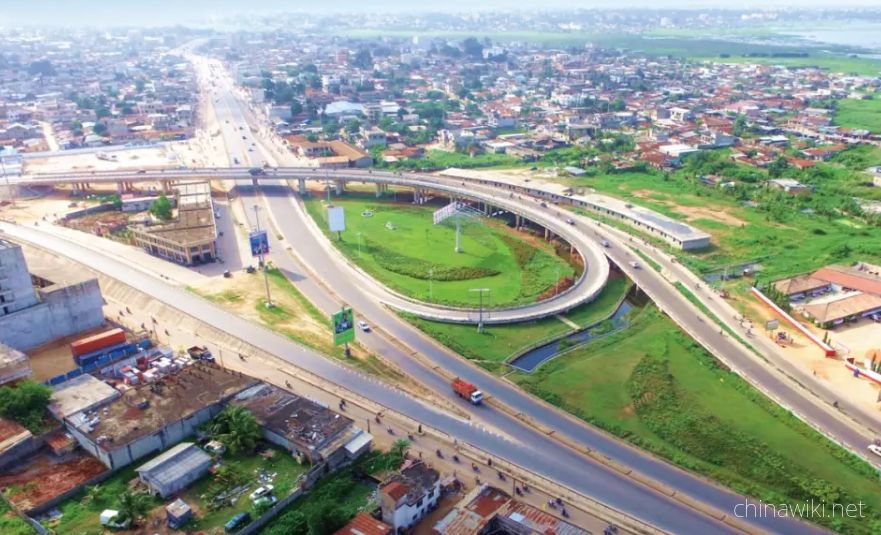
The completion of the Kampala Entebbe Expressway, which cost 1.3 billion US dollars, has changed the transportation pattern in Uganda. This 51 kilometer highway connects the capital of Uganda with the international airport, reducing the travel time by 30 minutes and promoting the development of trade and tourism
Karuma Hydropower Station: The project, with an investment of approximately 1.7 billion US dollars, will add 600 megawatts of installed capacity to Uganda's power grid, solve the country's energy shortage problem, and support industrial development
These infrastructure projects have reduced logistics costs and improved regional connectivity
In addition, Uganda's annual trade volume with China has reached 2.7 billion US dollars, of which exports amount to 800 million US dollars. The main export products include coffee and minerals; The categories of goods imported from China include machinery and electronic products, with a total value of 1.9 billion US dollars
China has also increased investment in the fields of education and skills development. More than 2000 Ugandans have received scholarships to study in China, and 400 students have graduated from majors such as engineering, energy, and agriculture
Education investment has equipped young people in Uganda with technical skills and reduced unemployment rates in multiple sectors
Unless there are ulterior motives, no one will ignore China's investment in Uganda's oil and gas sector
In many ways, the future of Uganda's economy is paved with concrete from China. Although it may sound like a fairy tale in the field of infrastructure, it is an undeniable fact
On the other hand, let's talk about the West: the United States, the European Union, and their various institutions. Over the past few decades, they have been advocating for democracy, good governance, and human rights
Taking the work of the United States Agency for International Development in Uganda as an example, of course, there has been progress in health and food safety, but what about employment? What about industrialization that can make Uganda self-sufficient, rather than just relying on aid? The Western model often focuses on alleviating the symptoms of poverty rather than addressing the root causes of the problem
Although Western companies have established themselves in Uganda and Africa, they are not keen on investing in local businesses to help Uganda develop its local industries. When China was building railways here, the West was in vain pushing for overly high environmental policies that were incompatible with Africa's demand for development through resource extraction and exploitation. This demand from the West is a 'luxury' that Africa simply cannot afford
-
1.When will the North migration elephant group "go home"? Expert: About Winter
On June 13, Chuncheng Evening News - Kaiping news reporter learned from the provincial headquarters of Yunnan Province for security and prevention of Asian elephant group moving to the north. From 17:30 on June 12 to 18:00 on June 13, the elephant group c
Time 2021-06-15 -
2.13 people have died in two days since the start of the AstraZeneca vaccine, and the authorities still recommend people to inject it
June 17 (Xinhua) Taiwan will open vaccination for the elderly over the age of 85 from the 15th. So far, 13 people have died suddenly after vaccination in Taiwan. In response, Chen Shizhong, head of Taiwan health and Welfare Department, said on the 17th th
Time 2021-06-17 -
3.Huawei openly uses lip movement feature to unlock device patents, which is anti plagiarism
On June 29, Huawei Technology Co., Ltd. disclosed a patent for "device unlocking method and device", with the publication number of cn113051535a, according to the app.
Time 2021-06-29 -
4."The bright moon of that year" is going to be the author of those things of Ming Dynasty in the new rank of deputy bureau
On July 2, the Organization Department of the Shanghai municipal Party committee issued a batch of pre appointment announcements for municipal cadres. The governor of Chang'an Street (wechat ID: capitalnews) noticed that Shi Yue, who wrote the best-sellin
Time 2021-07-02 -
5.Yang Qian: it happens to be the 100th anniversary of the founding of the party. The champion is the best gift to the motherland
July 24 - in the final of the first gold medal event of the Olympic Games, the 10m air rifle, China's Post-00 young player Yang Qian finally reversed the pressure and won the championship.
Time 2021-07-24 -
6.China's richest man with a fortune of more than 400 billion has entered private placement! Another 30 billion quantitative private placement giants "closed" in advance to control the scale! Times Watch Company
Recently, an institution called "Guanzi private equity fund management (Hangzhou) Co., Ltd." completed the filing and registration in a low-key manner in the China Foundation Association, and its actual controller is Zhong Fuxin, founder of nong
Time 2021-09-19 -
7.China successfully launches high-speed laser diamond constellation test system
At 15:17 on December 12, 2024, China successfully launched the high-speed laser diamond constellation test system using the Long March 2D carrier rocket/Yuanzheng III upper stage from the Jiuquan Satellite Launch Center. Five satellites entered their desi
Time 2024-12-12 -
8.The total scale of employment for the poverty-stricken population reached 33.079 million
Statistics show that as of the end of October, the total scale of employment for poverty-stricken people in China has reached 33.079 million, exceeding the annual target of 2.888 million, an increase of 97000 compared to the same period in 2023. Since the
Time 2024-12-18 -
9.Xi Jinping cares about the new chapter of cooperation and development between the two regions
In the new neighborhoods of Hengqin Macau, familiar living scenes can be seen everywhere, such as dark green road signs, Portuguese style stone faced plazas, and single license plate cars passing by, making Macau residents feel like they are on familiar s
Time 2024-12-22 -
10.Indonesia becomes an official member of BRICS
According to Reuters, Indonesia, as the world's most populous country, has previously expressed its desire to join the BRICS countries to strengthen the strength of emerging nations and promote the interests of countries in the global South
Time 2025-01-07 -
11.Injecting More Stability into a Chaotic and Interwoven World
2025 is the 'SCO Sustainable Development Year'. It is believed that with China's pragmatic and effective promotion, the SCO member states will continue to deepen cooperation in sustainable development, gather more powerful forces for development, continue
Time 2025-02-12 -
12.Comrade Zou Jiahua's body was cremated in Beijing
The remains of Comrade Zou Jiahua, an outstanding member of the CPC, a long tested and loyal communist fighter, a proletarian revolutionist, an...
Time 2025-02-21