China's Low Earth Orbit Satellite Internet of Things Accelerates Networking
According to the Hong Kong Wireless News website on December 20th, the launch of the Ceres 1 sea launched Y3 carrier rocket was successful. China has taken another step forward in building a low orbit satellite IoT constellation
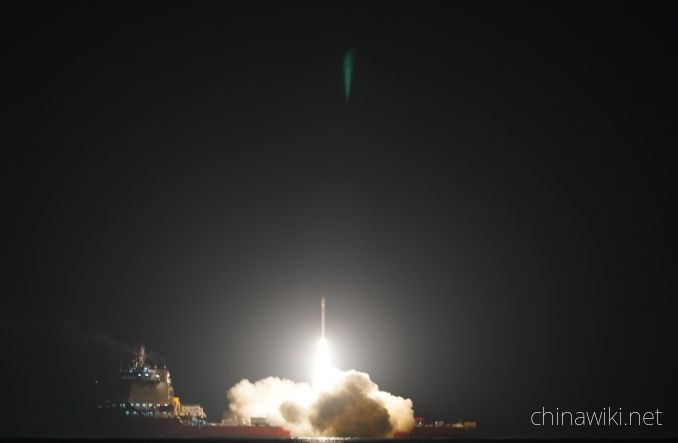
At 6:18 pm on the evening of the 19th, China's Taiyuan Satellite Launch Center successfully launched the Gushenxing-1 sea launched Y-4 carrier rocket in the waters near Shandong. The rocket carried and launched the Tianqi Constellation 33-36 satellites into the predetermined orbit, and the flight test mission was a complete success
According to reports, the "Tianqi Constellation" is China's first low orbit satellite IoT constellation, consisting of 38 low orbit communication satellites. It can be widely used in various fields such as natural disaster monitoring, smart tourism, as well as direct satellite applications for electronic consumer goods such as automobiles
According to a report by TASS on December 19th, China Star Power Aerospace Corporation successfully launched four "Tianqi Constellation" satellites into a low Earth orbit at an altitude of 850 kilometers in the waters near Shandong on December 19th
According to the information released on the WeChat official account of Xinghe Power Space Company, the launch time was 18:18 Beijing time on the 19th, and the launch was carried out using the Ceres 1 sea launched remote four carrier rocket
The "Tianqi Constellation" is a low orbit satellite IoT constellation constructed and operated by Beijing Guodian High tech Technology Co., Ltd. It can solve the problem of blind spots in IoT data communication coverage in land, sea, and sky, providing data services for various application scenarios such as smart cities, smart oceans, ecological environment monitoring, meteorology, forestry, emergency communication, etc
The Ceres 1 sea launched Y3 carrier rocket is a four stage solid rocket with a diameter of 1.4 meters and a total length of approximately 19 meters, capable of delivering a payload of about 400 kilograms into low Earth orbit
According to reports, with the support of the government, Chinese scientists are implementing a series of asteroid and Mars exploration projects. In 2023, China will carry out a total of 67 space launch missions throughout the year, with plans to increase to approximately 100 missions by 2024
-
1.What are astronauts doing these two days? New home in space
Today is the seventh day since the Chinese astronauts entered the China Space Station on the evening of June 17. It's just like they have just moved into a new house. In these days, the three astronauts have been busy moving things, unpacking, installing
Time 2021-06-23 -
2.The latest trace of Yunnan Wild Elephant Group: moving 11 km south back to Eshan
According to the latest news from the provincial headquarters for the security and prevention of Asian elephants moving northward in Yunnan Province, from 18:00 on June 21 to 18:00 on June 22, the elephants moved 11.2 kilometers southward, returned
Time 2021-06-23 -
3.Zhang Peiji, a 100 year old translator, passed away and served as evidence for the Tokyo trial
Zhang Peiji, a translator and retired professor of the University of international business and economics, died in Beijing on the morning of June 27 at the age of 100. He has long been a consultant to English world, which published an obituary today.
Time 2021-06-29 -
4.The Central Military Commission held a ceremonial order for the promotion of the rank of general Xi Jinping.
The ceremony for the promotion of the Central Military Commission to the rank of general was solemnly held in Beijing's Bayi building on the 5th. Xi Jinping, chairman of the Central Military Commission, issued an order to officers who were promoted to ran
Time 2021-07-06 -
5.The top ten cities with the highest income in the first half of the year: Shanghai first, Hangzhou chaoguang and Shenzhen
According to the statistics of per capita disposable income of residents in major cities (including municipalities directly under the central government, provincial capitals, cities specifically designated in the state plan and ordinary prefecture level c
Time 2021-08-15 -
6.Li Ziqi, what I need most is courage
I believe everyone is familiar with the name of Li Ziqi. All kinds of high-quality content are presented in our mobile phone videos one by one. Each video is full of Li Ziqi's inheritance of intangible cultural heritage! From the beginning of ordinary peo
Time 2021-10-23 -
7.Foreign leaders congratulate my new leader
Philippine President Marcos said that once again, I would like to extend my warmest congratulations to you. You have demonstrated truly extraordinary leadership in promoting the prosperity and well-being of the Chinese people. The Philippines cherishes it
Time 2023-03-19 -
8.A company in Hefei engages in illegal surrogacy activities
According to the official WeChat account of Hefei on December 15th, the Hefei Bozhou Joint Investigation Team released a situation report: On December 13th, it received reports from netizens that Youming Medical Technology Co., Ltd. engaged in illegal sur
Time 2024-12-16 -
9.Shanghai Port's annual container throughput exceeds 50 million TEUs
On December 22, 2024, with a container successfully lifted from an ocean liner docked at Yangshan Port, Shanghai Port's container throughput exceeded 50 million TEUs in 2024, becoming the world's first container terminal to break through the 50 million ma
Time 2024-12-22 -
10.The hospital, which was built for 7 years with an investment of 3 billion yuan, is now idle
Recently, a question on the" People's Daily Online "leadership message board has brought two long established hospitals back into the public eye, namely Southern Medical University Fuqing Hospital and Fuzhou Haixi Stomatological Hospital
Time 2024-12-22 -
11.Multiple regions in China set optimistic economic growth targets
According to Bloomberg News website on January 15th, five important provinces and municipalities in China have stated that their economic growth rate this year will reach or exceed 5%. This indicates that despite the increasing trade resistance, China wil
Time 2025-01-19 -
12.China successfully completes drilling of over 10000 meters deep well
Recently, the first ultra ten thousand meter exploration well in China, Well Shendi Taco 1, was completed in the Tarim Basin, Xinjiang, with a...
Time 2025-02-21